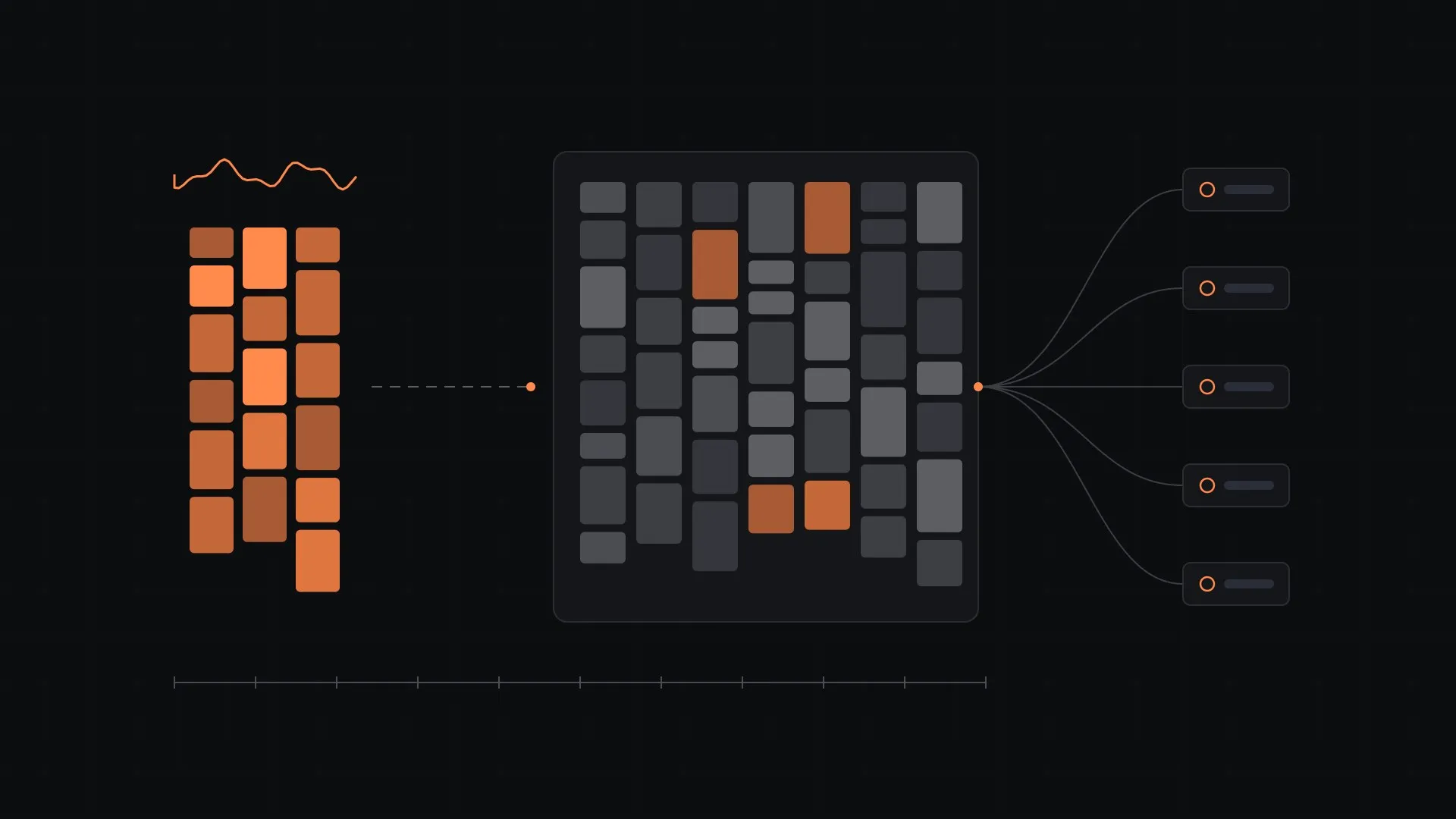
Changing our positioning, one more time
Arc is now the open-source time-series lakehouse. Why we changed the message again, what fourteen months taught us about where telemetry ends up, and an honest look at the year from the founder side.
Founder & engineer · Basekick Labs
Twenty years in and around technical teams taught me the same lesson over and over: the valuable thing is easy to hand over and expensive to get back. So I build the opposite. Arc is an open-source time-series lakehouse: hot telemetry fast, every reading of history kept in your own bucket as Parquet and Iceberg, one SQL across both. I build it at Basekick Labs, and I'm writing about it as it happens.

The flagship · Creator & maintainer
Most stacks downsample telemetry after 30 days, delete it after 90, and push whatever survives into a second system nobody wanted to build. Arc keeps all of it. Recent data stays hot on fast local storage for live dashboards and alerts. History compacts into Parquet in your own bucket, at object storage prices and full resolution. One SQL query reaches both, and the same files are published as Apache Iceberg tables that Snowflake, Databricks and Athena already read. One copy of the data, no Kafka, no Flink, no export job. Under the hood it is still a time-series database: one Go binary, DuckDB as the query engine, and the whole pipeline around it.
The company · Founder
Telemetry infrastructure teams own, for the history they cannot afford to lose.
Basekick Labs is the small team behind Arc, built on one premise: your data should outlive the vendor serving it. Hot telemetry fast, cold history cheap in your own bucket, and open Parquet and Iceberg so every engine you already run can read it. Built for aerospace telemetry first, and useful anywhere machines never stop producing data. One aerospace customer replaced InfluxDB 1.x with it because InfluxDB had no hot/cold story: every reading kept, history in their own bucket.
Arc Enterprise
clustering, RBAC, commercial licensing, and support
Arc Enterprise Managed
we run the database, you run the business
Migration from InfluxDB
Line Protocol unchanged, and tsm2arc imports 1.x and 2.x history. Guides for TimescaleDB, QuestDB, ClickHouse, and Timestream too
Where teams run it
aerospace and test telemetry, energy and utilities, manufacturing and IIoT, fleet and logistics
The rest of the toolbox
A product on its own is not a system. These are the parts that make the rest operable: a console to run Arc from, a CLI, a migration path off InfluxDB, a Grafana datasource, plus a couple of things I built because the problem wouldn't leave me alone.
Self-hosted web console for the Arc instances you run.
SQL console, schema explorer, logs, and monitoring, plus management for tokens, retention, alerts, continuous queries, and MQTT ingestion. Deploys next to Arc with Docker Compose.
LLM-agnostic memory layer for AI agents.
No embeddings, no vector database. Fast, structured, temporal memory that any model can read and write, because most agent memory problems are recall problems, not similarity problems.
Writer-agnostic Apache Iceberg table maintenance.
Compaction, snapshot expiry, and orphan-file cleanup for Iceberg tables, regardless of what wrote them. Open source.
Migrate InfluxDB 1.x and 2.x into Arc, straight off disk.
Reads TSM and WAL files directly, with no running InfluxDB instance required. Checkpointed and resumable, so a multi-terabyte migration survives an interruption.
The Arc CLI, built for operators.
Query, write, import, and manage Arc databases from a terminal or a CI pipeline, across as many connections as you run.
Production Grafana datasource for Arc.
Apache Arrow transport with JSON fallback, full alerting support, and query editing that understands Arc SQL.
Writing
Arc is now the open-source time-series lakehouse. Why we changed the message again, what fourteen months taught us about where telemetry ends up, and an honest look at the year from the founder side.
Managed Git hands you an outage you cannot fix and terms that change overnight. Self-hosting hands you identity, certificates, backups, and a pager. Almost nothing sits in between, which is the gap Basekick Git was meant to fill.
This site used to be about coaching. From here it is about founding a company and building a database at the same time: the engineering, the commercial decisions, and the parts I get wrong.